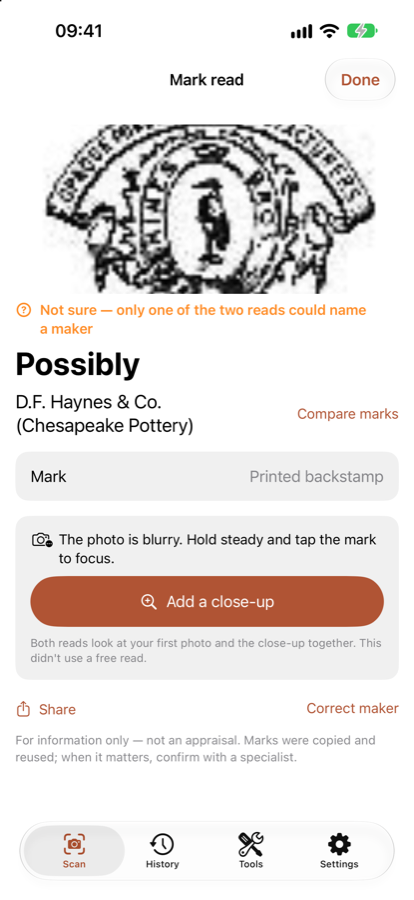
Two reads, or no answer
Every photo is read by two independent AI models. The app only names a maker when both agree. When they don't, it says possibly and shows the candidates, so you're never handed a confident guess. "Possibly" and unreadable results don't use a free answer.
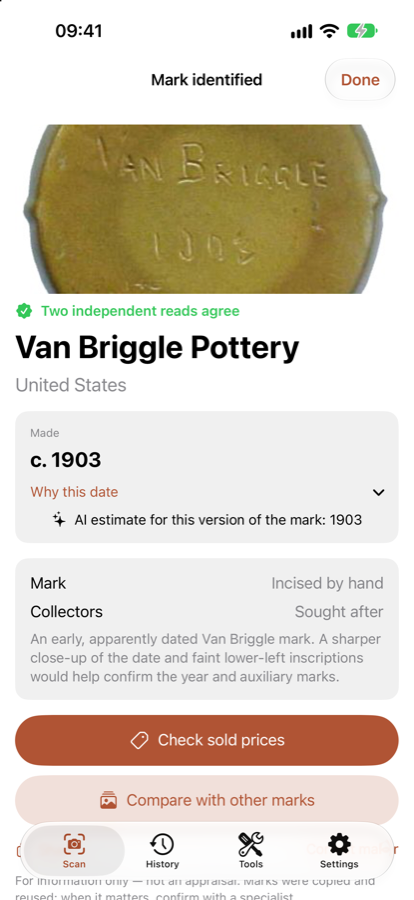
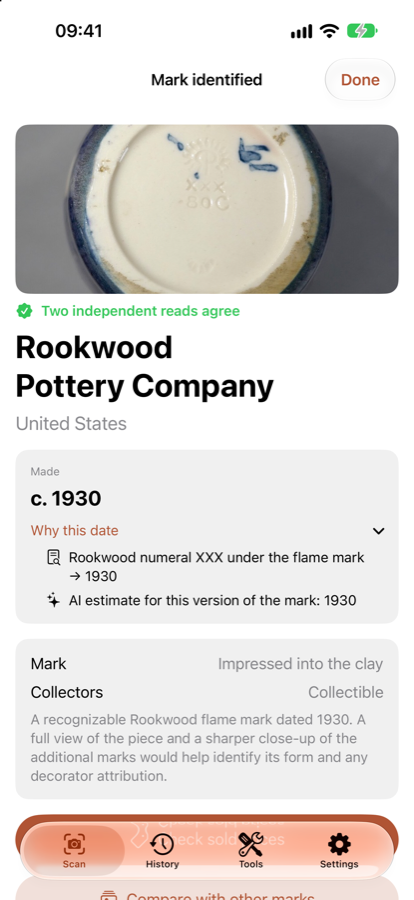
Dated by the mark itself
Registration numbers
British designs from 1884 carry "Rd No". The number gives the year it was registered.
Diamond marks
The lozenge on British pieces from 1842 to 1883 decodes to a day, month and year.
Country names
Nippon (1891–1921), Made in Occupied Japan (1945–1952), West Germany (1949–1990) and more.
Maker codes
Rookwood's numerals under the flame mark give the exact year.
Every date shows its reasons, so you can check them yourself.
No made-up values
The app never invents a price. One tap opens real sold listings for the maker and pattern.
Free and Premium
Free
3 answers
Plus the offline tools: registration numbers, diamond marks and the dating guide.
Premium
$6.99/month or $39.99/year
Every mark you find, close-up second shots, full history and CSV export. 7-day free trial on the annual plan. Fair use: up to 200 answers a month.
For information only, not an appraisal. Marks were copied and reused over the years; when it matters, confirm with a specialist.